Software Supply-Chain Security Platform

SBOMAtlas manages SBOMs, analyzes vulnerabilities, and coordinates supply-chain risk

Across an organization, its vendors, and its customers. Visibility into software components, faster vulnerability response, coordinated communication across everyone involved.

SPDX & CycloneDX VEX workflow Vendor & customer portals Full audit trail
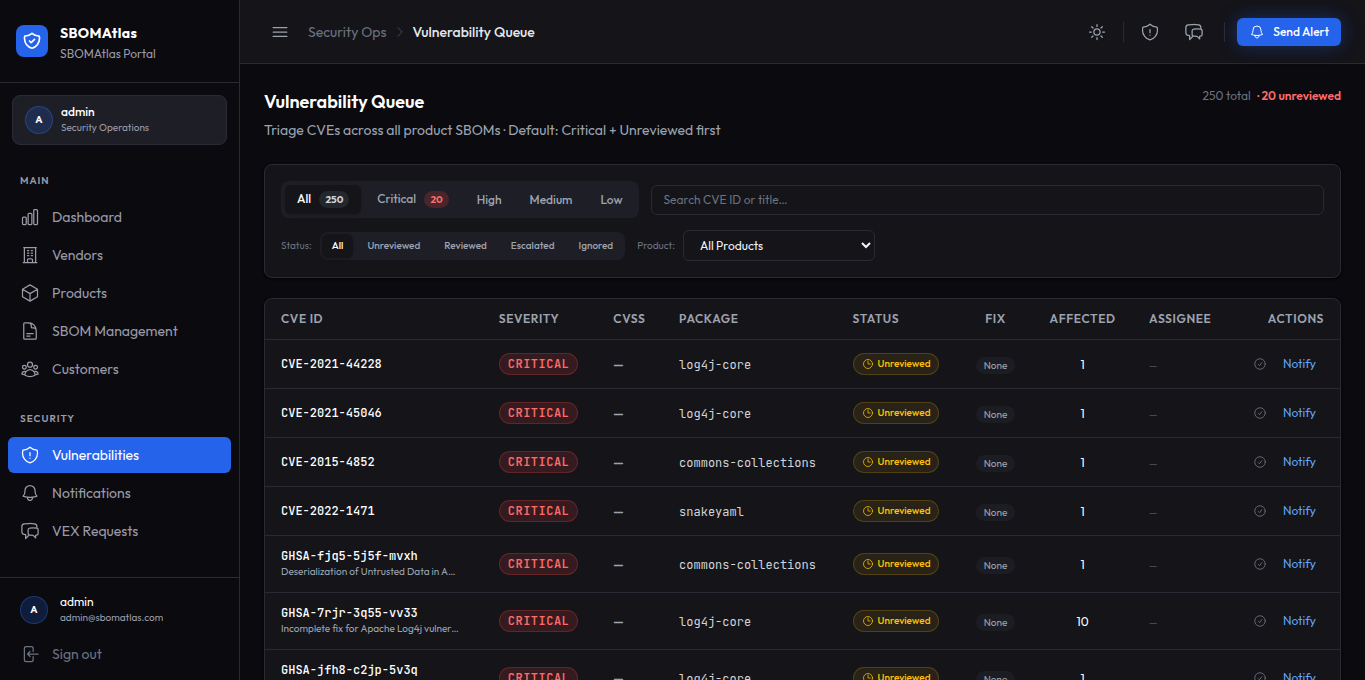
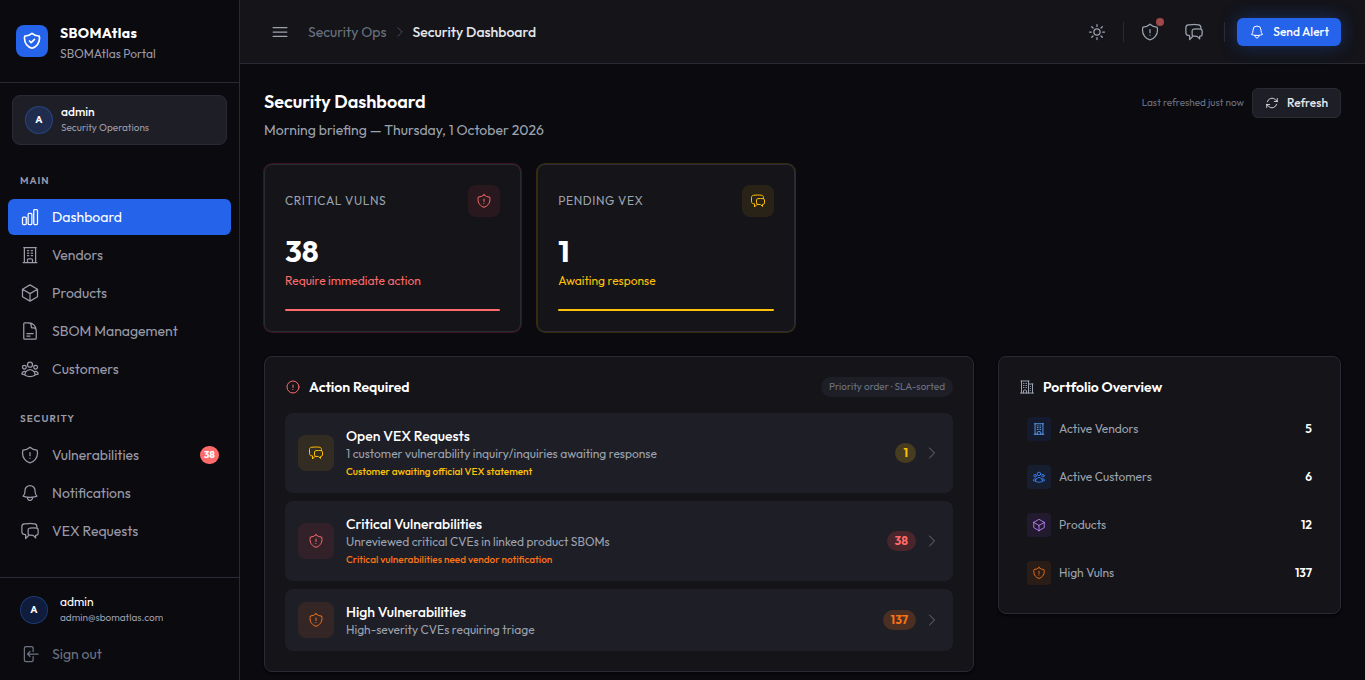
SBOMAtlas Security Dashboard screenshot
Watch the Overview

See the platform explained in two minutes

A narrated walkthrough of how SBOMs, vulnerabilities, vendors, and customers come together in one place.

What is SBOMAtlas

One platform for SBOMs, vulnerabilities, and everyone they affect

SBOMAtlas is a platform for collecting and managing SBOMs, automatically analyzing software components for vulnerabilities, and coordinating with vendors and customers — including formal VEX (Vulnerability Exploitability eXchange) responses.

Instead of scattered SBOM files, manual CVE lookups, and email threads with suppliers and customers, SBOMAtlas keeps the whole cycle in one place: what is in your software, what is wrong with it, who owns the fix, and who needs to be told.

Collect

SBOMs from vendors, pipelines, and your own builds — organized by product and version.

Analyze

Components checked automatically against known vulnerability data as SBOMs arrive.

Coordinate

Triage, VEX statements, and notifications that reach the right vendor or customer.

The Problem

Software risk is scattered across files, tools, and inboxes

Most organizations already receive SBOMs. Very few can answer, on demand, which products are affected by a vulnerability and whether it is actually exploitable.

No central visibility into what is inside an organization's software
SBOMs arrive from vendors but are not systematically managed
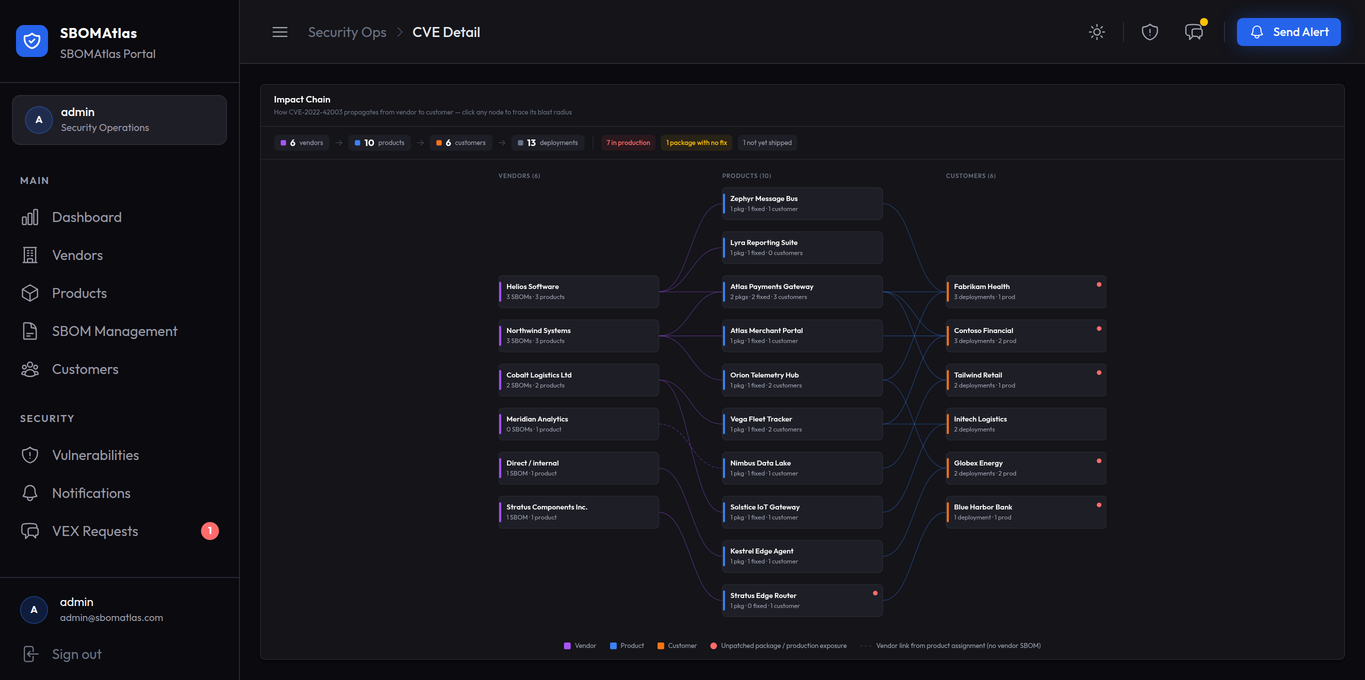
Vulnerabilities are not automatically connected to affected products or deployments
No structured workflow to review, assign, or dismiss vulnerabilities
Vendor and customer coordination happens manually, over email
No consistent way to state or request whether a vulnerability is actually exploitable
Why SBOMAtlas?

One platform instead of separate tools and manual coordination

SBOMAtlas connects SBOM management, vulnerability analysis, triage, VEX, product/deployment visibility, and vendor/customer communication in one place.

Centralized SBOM visibility

Every SBOM lives in one place, organized by product and version, instead of scattered files.

Connects organizations, vendors, and customers

A shared platform instead of disconnected spreadsheets and email threads.

Surfaces the vulnerabilities that actually matter

Triage and VEX separate real risk from noise.

Simplifies VEX communication

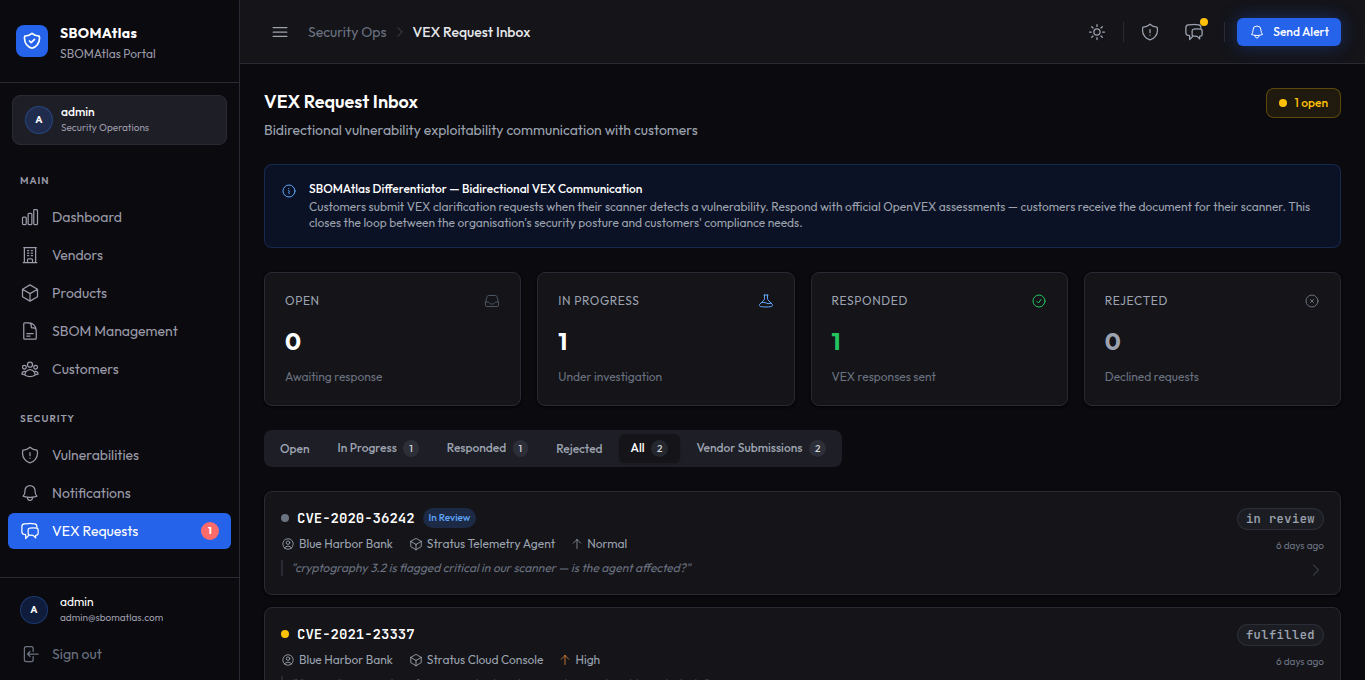
Exploitability statements and requests are created, tracked, and fulfilled in one workflow.

Reduces manual security coordination

Notifications, acknowledgments, and vendor/customer inquiries are tracked automatically rather than chased by hand.

Continuous visibility and traceability

Dashboards and an audit trail give an ongoing, defensible view of software risk, not a one-time snapshot.

Explore the Platform

Three portals, one shared workflow

Each party gets an experience scoped to their role — and they all work from the same SBOM and vulnerability data.

Organization Portal

What it provides

The central workspace where an organization manages its products, SBOMs, vulnerabilities, and relationships with vendors and customers.

What users can see or manage

Product inventory, vulnerability triage, VEX activity, vendor and customer relationships, notifications sent.

Why it is useful

One place to run the entire vulnerability and supply-chain response process.
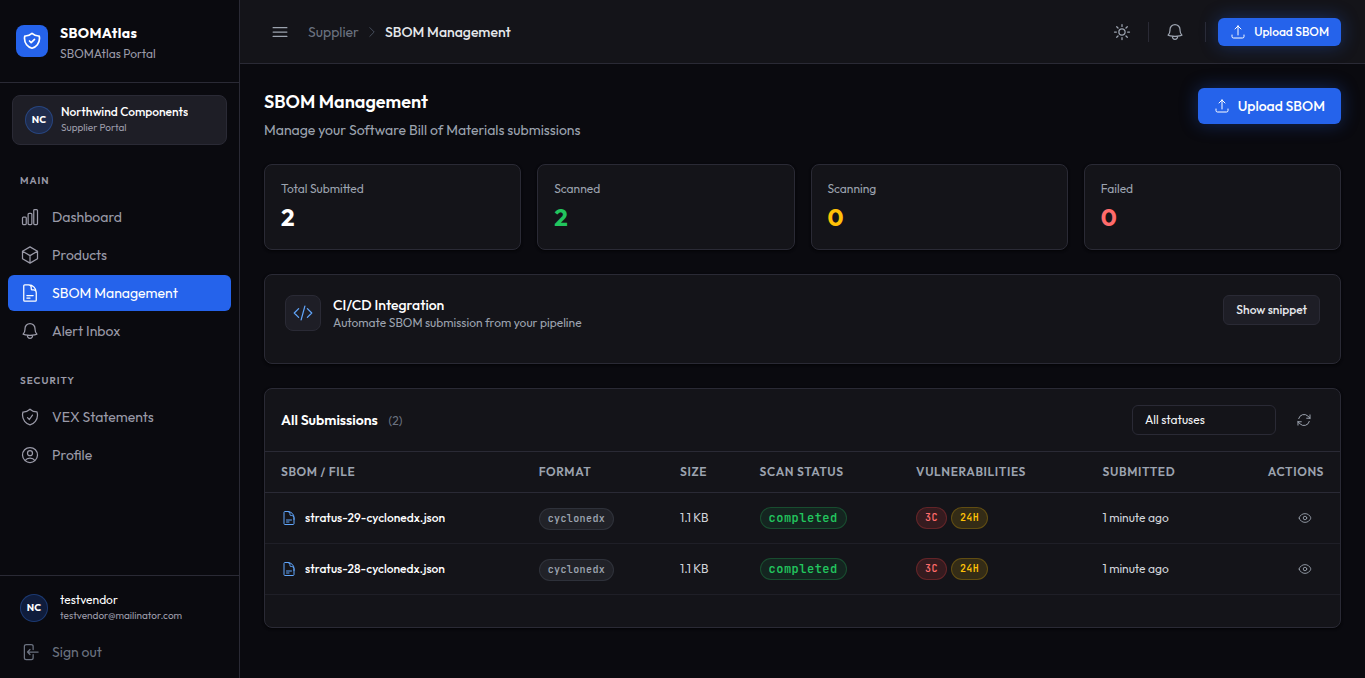
Vendor Portal

What it provides

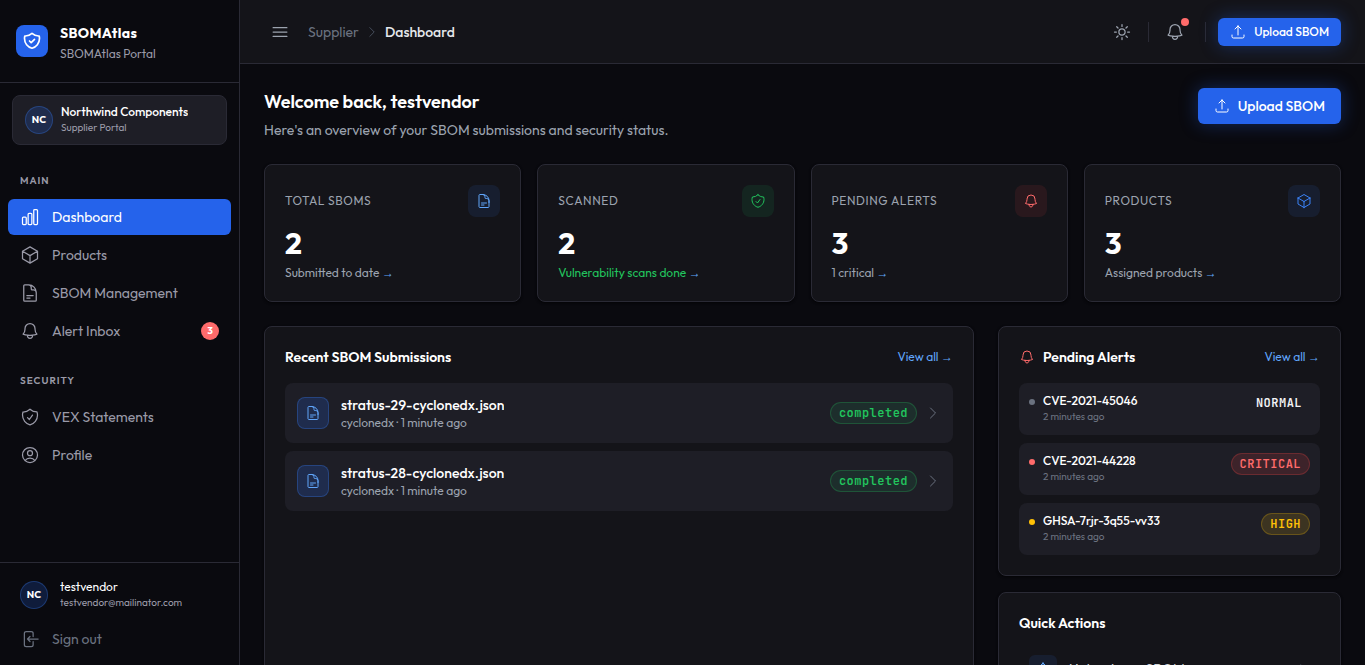
A dedicated space for software vendors to submit SBOMs, respond to security inquiries, and issue VEX documents.

What users can see or manage

Their submitted SBOMs, alerts from the organizations they supply, and VEX documents they have created.

Why it is useful

A structured, direct channel to answer vulnerability questions instead of ad hoc email.

Customer Portal

What it provides

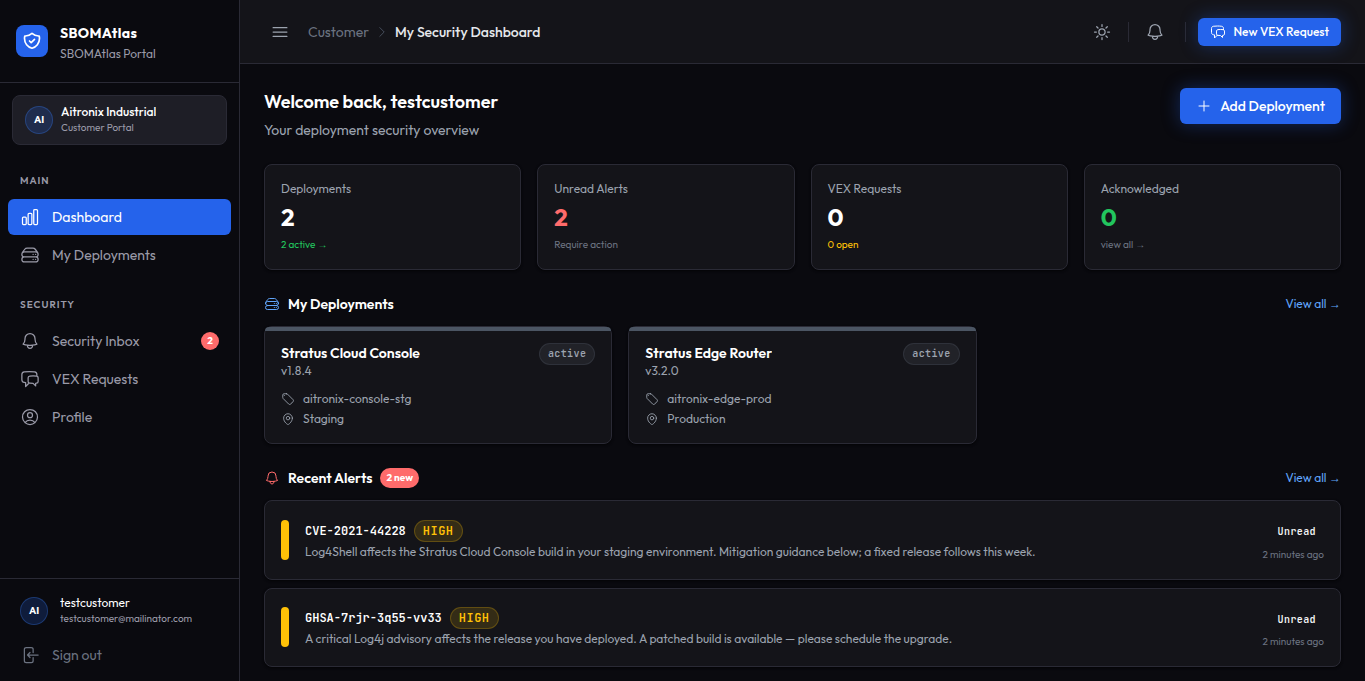
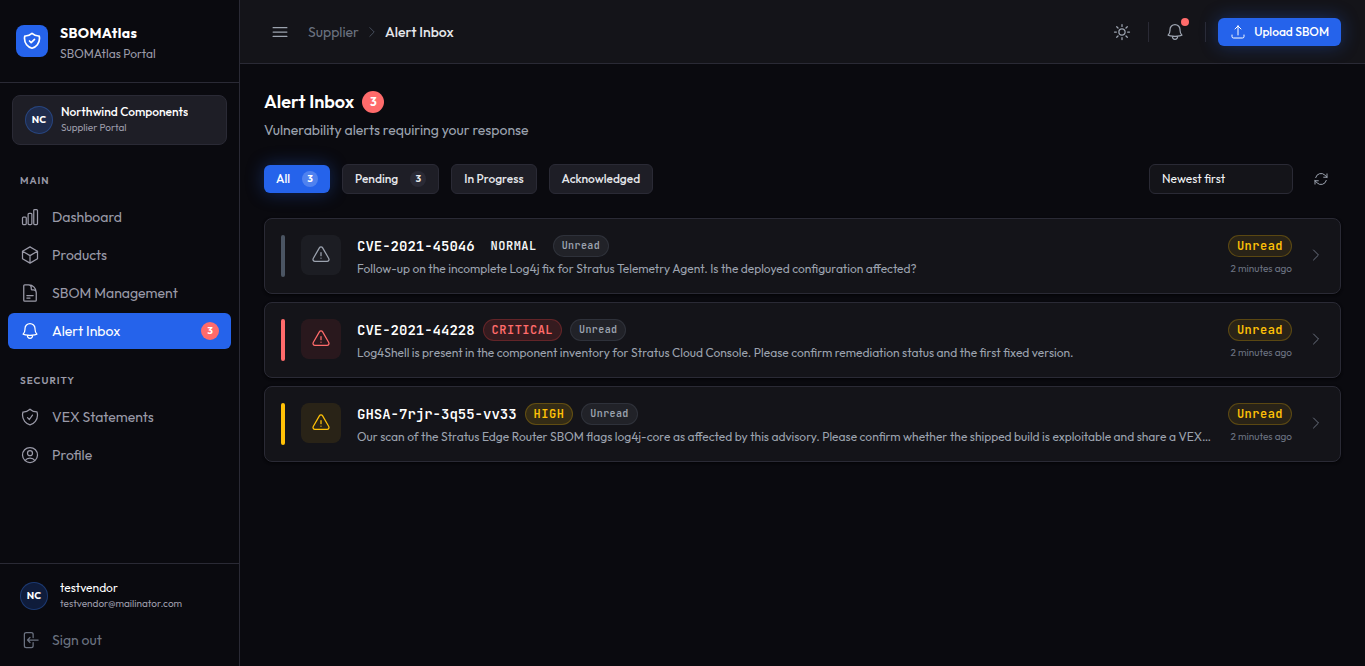
A view for customers to see which products and versions they have deployed, track vulnerabilities that affect them, and request VEX information.

What users can see or manage

Their deployments, related vulnerability notifications, and VEX requests they have submitted.

Why it is useful

Customers know exactly what is affected and get authoritative answers, instead of guessing.

How It Works

From an incoming SBOM to a confirmed response

SBOM → Software Visibility → Vulnerability Analysis → Triage → VEX / Response → Notifications → Continuous Monitoring

1

SBOMs come in

From vendors, or generated and uploaded by the organization.

2

Software becomes visible

SBOMs are linked to specific products and versions.

3

Components are analyzed

Every component is checked for known vulnerabilities.

4

Findings are triaged

Reviewed, assigned, escalated, or dismissed.

5

Exploitability is clarified

Where needed, through VEX.

6

Affected parties are notified

Customers and relevant vendors are told what applies to them.

7

Visibility continues

Dashboards and audit history keep risk posture current, not a one-time snapshot.

Platform Screenshots

A look inside SBOMAtlas

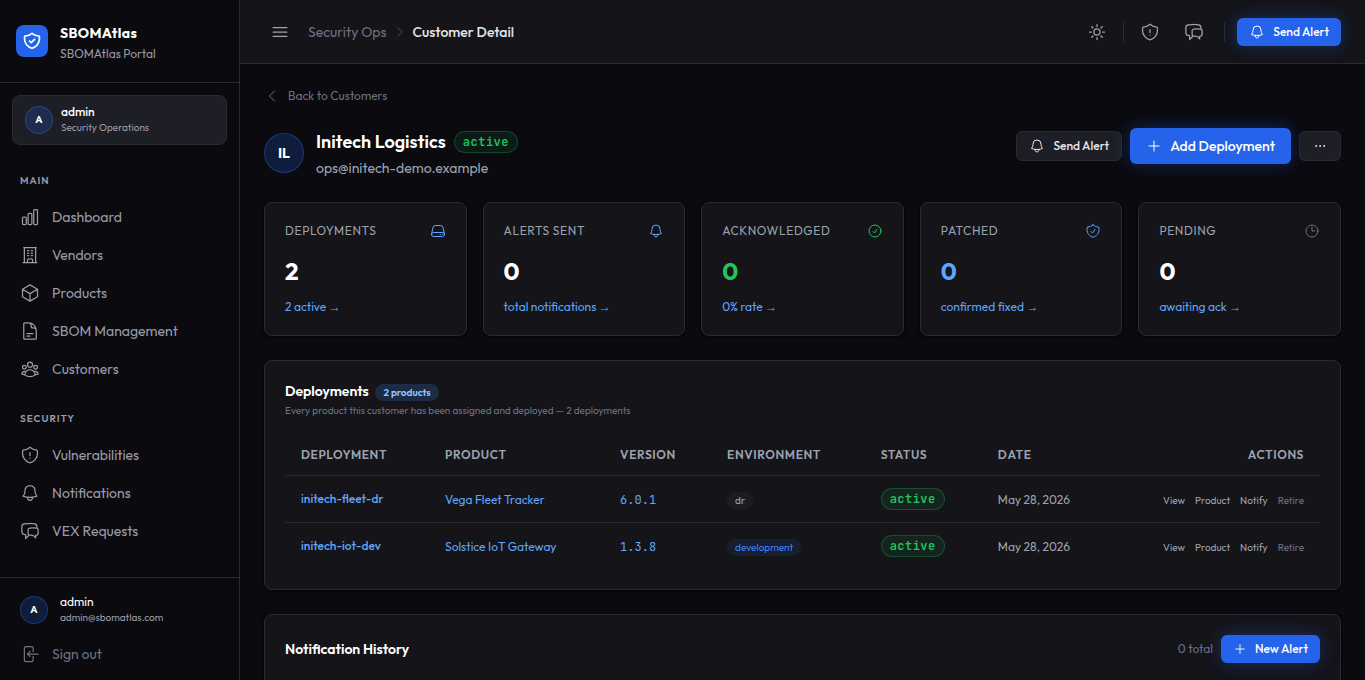
Organization Dashboard — SBOMAtlas portal screenshot

Aggregate risk and vulnerability posture across every product.

Who It's For

Built for everyone who has to answer for software risk

Security teams, software organizations, vendors, customers, and the leadership accountable for all of it.

Security & Product Security Teams

Identify, triage, and track vulnerabilities across the products they are responsible for.

Software & Product Organizations

Get visibility into what is inside the software they build or ship, and a system to manage it.

Software Vendors

A structured way to submit SBOMs and respond to customer questions about exploitability.

Enterprise Customers

Know whether deployed software is affected by a given vulnerability — and get authoritative answers.

Engineering & IT Leadership

A clear, ongoing view of software risk posture to guide decisions and satisfy reporting requirements.

See SBOMAtlas against your own supply chain

A walkthrough of the platform with your products, vendors, and questions in mind.